

Group Actualization
Why the next stage of human development happens between us

tl;dr: Self-actualization isn’t the end of human development. When self-sovereign individuals come together, something remarkable becomes possible: group actualization—the emergence of a shared field of intelligence.
Two notes before we get going:
All of my facilitation is oriented towards group actualization. If you are interested in learning more, I encourage you to sign up here so that we can keep you informed about our next Facilitators’ Coaching Cohort coming this fall.
Also! My friend Danielle Coates-Connor of Crush Life Manifesto fame is offering a creative production camp this spring.
Now back to regularly scheduled programming.
Last week we talked about how “we cannot do this alone.” I shared a chapter from the book I’m writing on what is Beyond Psychedelics. It focuses on the fact that transformation is not a private project.
This week I want to stay with the thread and invite us to talk about Group Actualization.
Think of group actualization as an expanded perspective on the idea of self-actualization, the concept that sits at the top of Maslow’s hierarchy of needs.
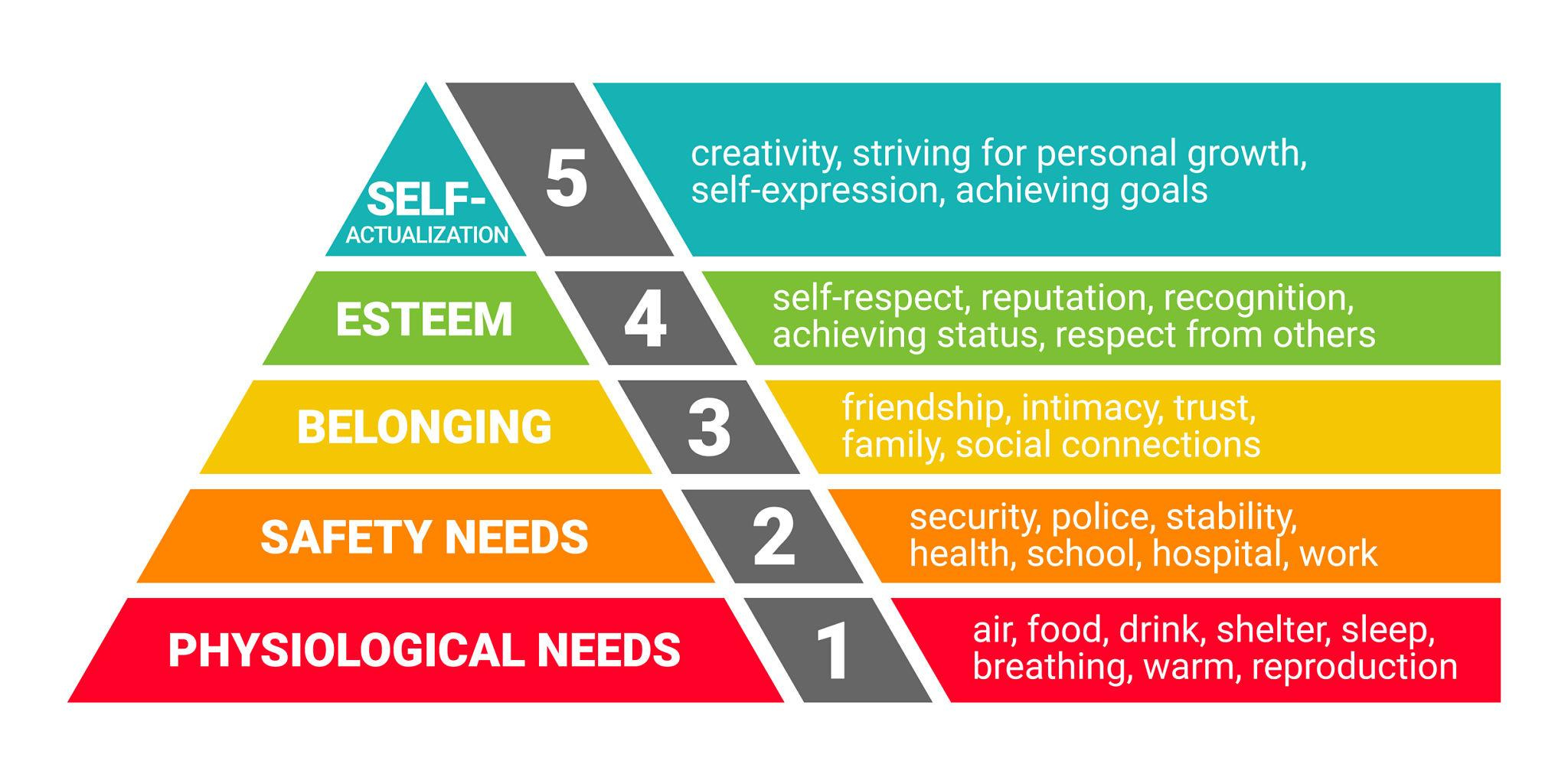
Surprisingly, the first time I heard the term “group actualization” was from Tim Ferriss. And it was just the other day. He is the megapodcaster of 4-Hour Work Week fame. And I’ve been listening to him forever. It has been beautiful to witness his growth and evolution.
Ferriss is a long time leader in the field of self-optimization. At the top of his podcast, he says that his job is “to deconstruct world-class performers, to tease out the habits, routines, favorite books, and so on, so that you can use them.”
Important to mention that Tim has also been a leading voice in legitimizing psychedelics, and a big funder of rigorous psychedelic research.
I say all of this because much of Tim’s success has come from meeting a powerful American myth: the belief that you can do anything you set your mind to, and that sheer will, strategy, and discipline are enough. This is music to the masculine energy inside each of us.
And here he is, the guru of the individual path, decades of success in the game, being interviewed by André Duqum on the Know Thyself podcast, talking about group actualization.
That caught my attention. Because if even the great evangelist of individual optimization is pointing toward the collective dimension of human development, then something important may be shifting in our cultural imagination.
So what does Group Actualization even mean?
It is hard to conceive of it from within our hyper-individualistic culture. And yet it is among the most important of all important human endeavors.
I had never used the term. But I have devoted my life to group actualization.
My work is rooted in the understanding that there is an intelligence that lives in the space between us. And that it is just as real as you and I are real.
To put it in a nerdy way:
The link between the nodes is an ontological equal to the nodes themselves.
We can tend to the space between us. By turning towards it. Nurturing it. And even learning to move and speak from it. There is a greater intelligence, an emergent intelligence, that wants to make itself known among us.
It is vibrant and awake, and so it feeds our sense of wakefulness. It is connection itself, and it is therefore compassionate. It is curious and creative and so it enlivens our own sense of curiosity and creativity.
It is something we need and long for. And it cannot be replaced by material well being, by the illusion of total safety, or even by an individual sense of wakefulness.
When a group of people come together with an intention to connect at this level, a whole other world of possibility begins to open up.
This is at the heart of my facilitation work. I facilitate all sorts of spaces. Some of those spaces are explicit and intentional about group actualization. Other spaces are more about leadership and strategy. But whether the invitation is explicit or not, my own commitment to group actualization allows me to bring its possibility. My experience is that most participants, most of the time, are able to taste it. And to appreciate it.
Once we sense the possibility of group actualization, we realize that it is something that we deeply want.
And two things become important:
A distinction and a requirement
The distinction is between “interpersonal” and “intersubjective.”
All of us know something about interpersonal space. Most of us still have a lot to learn about it. But it is of great importance. And it gives shape to our structures of belonging.
Think of interpersonal space as the spaces where we regularly gather and relate to one another as individuals. For most of us, this is mainly within our families and our friend groups. Many also have hobbies, passions, athletic, political, or spiritual spaces that bring them into interpersonal space with other people.
These spaces come with more or less depth; depending on our willingness, our skill, and our capacity.
Human beings need community. And too many people in the West are lacking it. This is part of why we see rising “deaths of despair” and growing concern about the loneliness epidemic.
I consider interpersonal space level one, the basic and necessary level for a healthy human existence.

But interpersonal space is not the same as intersubjective space. And intersubjective space is what blows open the possibility for group actualization.
When we connect in intersubjective space, we become less concerned with each other’s personalities, with how much we tend to like or dislike someone.
We can think about interpersonal space as a relationship between two or more distinct individuals. The basic unit here is “I and you.”
In intersubjective space we encounter something different:
The shared field of meaning that arises between subjects.
The co-created field of consciousness and meaning that emerges when subjects meet.
The basic unit here is not “I and you.” The basic unit is “We.”
Among people who do deeper work with me, we like to call this the “we space.”
We know that the conditions are ripe for group actualization when we experience:
A shared rhythm
Collective insight
A sense that “something is happening through us”
Coherence that no individual owns
Intersubjective space is less about exchange and more about emergence.
Now to the requirement.
Self-sovereignty is a condition for group actualization
Self-sovereignty is a person’s capacity to bring themselves back to coherence when they are triggered. A self-sovereign individual stops demanding that the world mold itself around their wound. This is a person that knows how to “have themselves.” They are not likely to lose track of their inner compass in a social context or in unhealthy relationship dynamics.
Self-sovereignty is important because human beings are quite skilled at losing themselves into a group. From football games to mobs, from collective effervescence to stampedes. Whether positive or negative, we can very easily lose ourselves, not just in moments but also within cultish contexts or rigid ideological frameworks.
If you have not developed enough self-sovereignty, then you are more vulnerable to lose yourself, your autonomy, and your north star in a group context, especially within one that satiates your primal need for belonging and promises that somewhere in the future you will have everything you’ve ever longed for.
This can be dangerous when we come together for the purpose of group actualization. Without enough self-sovereignty in the space, the gravitational pull of the group can turn a field of liberation into a field of conformity and coercion.
We attain self-sovereignty through a conscious maturation process that begins with a lot of healing work. We know that we’ve healed enough to move into self-sovereignty when we are ready to give and contribute to a collective in a way that does not exhaust or drain us. We start to move about the world with a grounded rootedness, a growing sense of trust in life itself. A humble but healthy sense of self. A clear sense of being guided by an inner compass. And a deep longing to participate in our collective becoming.
When enough self-sovereign individuals come together, the group stops being a crowd and becomes a field of intelligence.
And from that place, grounded, self-possessed, and guided by an inner compass, we become capable of something remarkable.
We become full participants in the process of group actualization.
Very interesting